Sunday, April 7, 2013

THE CURSE OF THE INPUT DEVICE


“Players do not just engage in ready-made gameplay but also actively take part in the construction of these experience: they bring their desieres, anticipations, and previous experiences with them, and interpret and reflect the experience in that light.” (Ermi & Mayra)

Video Game researchers Ermi and Mayra touch on the concept of previous experience and how they relate to video games. For most video games, the previous controller experience allows a user to pick up the game and play almost immediately. A user can pick up a controller and, based on the type of game, infer how the input device will work. Ermi and Mayra write about using previous experience to inform the player and to enhance satisfaction. For Heroes of Rock, we encountered a particularly challenging previous experience scenario. Our game was selected because of the use of a guitar peripheral. The guitar was our marketing exclamation point and it was the core of the game. Being bound to the guitar presented a slew of design problems especially surrounding previous user experiences.
When I was designing the gameplay for Heroes of Rock, I designed the controls around my experiences playing side scrolling action games and my experiences using a guitar peripheral. Side scrolling action games have a pretty standard set of mechanics and all gamers are familiar with their control schemes. There is no standard way of playing a real guitar or bass and there is no standard way of playing Guitar Hero or Rock Band. It was apparent in our first play testing session that almost every player had a different way of using the input device. Some players sat down to use the controller, some players used the strap to hold the guitar, some players help the guitar with their strumming hand, some players used their thumbs to strum while others used fingers and so on. All play testers had different feelings on our control scheme because they had different experiences informing them on how the game should play. We played around with multiple control schemes. We received equally positive and negative feedback on nearly every system. We were never going to make 100% of our play testing group happy because their previous experiences were just too different.
            We scrapped thousands of lines of codes, dozens of design documents, and hours of art production as we constantly shifted on how the game was going to function. This process took a toll on the team morale and made progress difficult for every aspect of the game. The element of our game that got us selected and that made our game so interesting was the most difficult. This design problem was my greatest weakness as a leader on this project. I was hoping that we could find a control mechanic that would satisfy more people on our team and more play testers. Some schemes did better than others, some were received poorly but I constantly felt that we could find something better than what we were doing. I felt like there had to be some system that would feel natural to players. This is when our understanding of previous experiences became important.
Based on the diversity of player experiences, no control scheme is going to be natural to all players. For our game, we couldn’t rely on previous experiences to inform the players and if we did, it might lesson the experience. To make our game feel appropriate on the guitar, we had to design mechanics that informed the player of how to play, rather than relying on what players have already learned. To settle on a final control scheme, we focused on the core of the game and what we were trying to accomplish. 

Sunday, March 17, 2013

Reward Sounds

From my previous post on player feedback/player experience:


  • Reward sounds - Part of the action game genre is feeling good about the amount of destruction that you are causing. Video Game fun is just like gambling fun. Pulling a levelon a slot machine isn't very fun but when you hear bells & whistles or even an announcement of your win, the player feels very good. We need to implement audio reward systems to help the player feel that gambling rush. 
    • In the Unreal/Halo games, when a player hears "killing spree" there is an immediate rush of accomplishment. 
    • In the Call of Duty games, the player is rewarded for each kill they achieve and the manner in which they kill the enemy. This helps the player feel good for each action they accomplish. 
Reward sounds are an incredibly important part of the action game experience. As I mentioned in my post, I feel that audio reward feedback enhances player satisfaction and the "fun level" significantly. Here are couple sounds that I think would help our game:

Audio Reward Feedback - 
  • Skull System; as the player gets more kills they receive more skulls. We have a range for each type of skull that allows us to place a different award at each range - slam sound, announcements
    • Red skull = 1-4 kills
    • Yellow skull = 5-19 kills (DEMON SLAYER)
    • Green skull = 20-49 kills  (BLOOD BATH)
    • White skull = 50+ kills. (RAMPAGE)
  • 11 out of 10 Sound; when players reach 11/10 on their rock meter they should receive a particular notification - Guitar Riff
  • Concrete Smash - The player needs feedback when they are smashing the ground and not the enemy - Smash
  • Knob Click; every time the knob moves a level the player should get some kind of notification - Knob Click
  • Low Rock Level - Static or boos, cracking glass
  • High Rock Level - Cheers 
  • Dash sound; the dash is our coolest move in the game, we need to have a sound effect that makes the movie feel better - friction sound
  • AOE Shockwave sound, we need to reinforce the feeling of power with the AOE attack with the Shockwave sound - air blast
  • AOE charge up sound - We are giving players an opportunity to "jam out" during the charge up for the AOE. We need to give them an audio indication that the move is charging up - gradual charge up


Saturday, March 16, 2013

Designing the new enemy interactions

We've had this conversation a bunch in class but I haven't put up our conversations onto my blog. I think it's time to reflect upon what we've been thinking. 

Overall, I believe that new player experiences help make a game fun. When players experience something new and surprising, they get this rush of exploration and difficulty. It is a new scenario to deal with and it's a surprise from the norm. Players love this kind of thing.

Due to art problems/complications, we scoped out a lot of our special sequences and interactions. After the cuts, we had a very basic set of enemies and a very basic set of interactions with those enemies. Players had very little diversity in what they experienced in the game. They would most likely get bored with their attack set and the enemy interactions. 

To add to our diversity in player experiences we added functionality to our current models:

  • Standard Enemy - Shield Attack. A new version of the standard unit has a shield. This gives the uppercut attack a purpose. This also gives a moment when the standard attack doesn't work on standard enemies. This mixes things up a bit and it helps change how the player is attacking. 
  • Ranged Enemy - Pogo attack. Our original ranged unit was a stationary unit. This made sense in earlier builds of the game but it didn't make much sense when using the brawler mechanic. For long walking sequences, the stationary unit works but for the action segments we needed a new way of interacting with the ranged enemy. The ranged unit uses its missile launch to pogo around the map. This is a brand new experience and forces the player to play in a new way. 
  • Heavy Enemy - Area of Effect attack. From the first encounters with the heavy enemy, the player realizes that they have to attack from behind. The area of effect attack forces the player away and gives the heavy unit unpredictable behavior. The first time the player's strategy is countered will be a good experience. 

Reward System

At this point in our development of Heroes of Rock we have an action game. The player action isn't much different than what players usually do in action games. We have player interaction right now but to make our game "fun," we have to give the player more of a feedback system. When players accomplish something, they get that endorphin rush for that accomplishment. There's only so much that players get from deleting pixels off of a screen. 

To increase player satisfaction, we need to implement more satisfying reward systems to make players feel good when they play the game. We want players to have more fun. 

  • Enemy feedback - when player attack an enemy, we need to have more feedback that the player is doing something
    • Enemy collision -  Right now our attacks go past the enemy. This lack of direct collision is confusing to the player and it disconnects how the player feels about hitting an enemy. They don't feel like they are really affecting the enemy.
  • Increase speed and pacing of game - We have crafted this "metal" experience but our game is currently paced in small bits of action. That isn't very metal. If we want to maintain player satisfaction, we need to have longer periods of excitement. 
  • Melee sounds for actions - Player feedback is very important and I think we are especially missing audio feedback. When players do something, they need to feel like there is a direct response. For an action game, melee sounds are super important. The player needs to feel like they are dealing damage to enemies or they don't feel like they are directly having an effect. 
  • Reward sounds - Part of the action game genre is feeling good about the amount of destruction that you are causing. Video Game fun is just like gambling fun. Pulling a level on a slot machine isn't very fun but when you hear bells & whistles or even an announcement of your win, the player feels very good. We need to implement audio reward systems to help the player feel that gambling rush. 
    • In the Unreal/Halo games, when a player hears "killing spree" there is an immediate rush of accomplishment. 
    • In the Call of Duty games, the player is rewarded for each kill they achieve and the manner in which they kill the enemy. This helps the player feel good for each action they accomplish. 
  • Power of the Player - An overall feedback that we need to demonstrate in our game is that the player is powerful. Our game is about being a rock god. If the player doesn't feel powerful, the core of the game is lost. In general, the player needs to see that they have some power in the universe. 
    • Blood decals  - Gore makes players feel powerful in their destruction. We've developed a system so that we can splatter blood on the ground and the environment. 
    • Blood splatter on the screen - After the area of effect explosion multiple enemies are killed. To intensify the effect, we will splatter blood on the screen. 
    • Area of Effect Explosion - We need a moment when players can "jam out." When players really start to button mash, they rapidly hit the strum bar up and down. Our AOE attack allows players to perform that "jam out" session and then rewards them with a huge explosion. This gives the player that experience that they are looking for and it makes them feel powerful. 
    • Uppercut - Our current uppercut works but we need to intensify the effect so that the player feels better when they perform the move. The player needs to launch the enemies in to the air. 

Saturday, February 9, 2013

Feedback from the Graduate EAE Playtest

Last Friday, the graduate EAE program playtested our game. We got a good amount of feedback, particularly on a couple of small things:


  • Enemy Feedback - The player is doing stuff to the enemies but the enemies aren't reacting yet. Players like to see a reaction to every action that they perform. It improves the experience
  • Include Jump - We had hours of conversation about taking out the Jump mechanic. We all logically decided that jumps were not necessary. Being minimalists, we removed the non essential mechanics from the game. During the playtest, we spoke about how Jump isn't necessary but it's fun. That is a home run argument. We need to include a jump or we need to embellish the dash mechanic to make travel more fun in the game. 
  • Unexpected benefits - Players like to be surprised. They like it when they suddenly get some new ability or something exciting happens to them in the game. We already have the dial mechanic and I think that it would be great to add unexpected player benefits for when the dial reaches 11. I want to see flames and particle effects all over the place when we reach 11. 
  • Tutorial - As I spoke about earlier, we need a tutorial for our game. The controls are good but people need help understanding how the guitar translates. 
  • Players should get rewarded for pacing attacks with the animations. I actually like this idea as a way to make the game more rhythmic. It is a music game afterall. 
  • Duke Nukem Dialog - I loved the old Duke games particularly because of the personality. I think adding some Duke Nukem dialog would be a good nostalgic element. I think it adds more to the charm of our game. It could be a great addition. 
  • Bonus Section - We have a score element of our game. I think we should take the bonus score sections of guitar hero and put it in our levels. I loved that jam session at the end of guitar hero songs and I think bonus sections could add a level of fun to our game. 
  • Include small amount of movement with attacks - I think adding a small amount of movement helps players feel better about using the strum to attack and move. 

All of these points are small parts of a big project but I think it will add a lot to the project. 

Tutorial Section for the Game

The number one point of contention in our game has been the controls. Everyone plays guitar hero differently and when a player picks up a guitar hero guitar for a brawler, they have a certain way that they want to play the game.

As we talk about control schemes, the controls that make sense for our team are the controls that match their play style for Rock Band. This makes almost any control scheme not "intuitive." I am a believer in simplicity of games and I think a player should be able to  pick up any game and play it instantly. If you need to explain the controls, it probably means your controls aren't very good.

That being said, we are making a weird game and we have to retrain people to understand the control scheme of our game. We are combining two types of games and two types of control schemes.

We believe that if we have a strong tutorial players will accept our control scheme better. I think that the tutorial will dramatically help the understanding of our game and the transition from guitar hero to brawler.

Here's the tutorial script Nick just sent me:


1. Movement explanation
Guitar: you can move by strumming up/down
Controller: you can move by pressing left/right
Completion: A move here icon appears on the right of the screen

2. Dashing explanation
Guitar: you can dash by pressing green or orange and strumming in the direction you want to go (is this changing?)
Controller: you can dash by pressing left shoulder or right shoulder based on the direction you want to go
Completion: A move here icon appears in the middle of the screen

3. Hud explanation
Guitar/Controller:  This is your rock level, it goes up as you attack enemies, but goes down when you aren't attacking, or when you take damage.  If it goes below 1, you die.  Keep it high to get a better score. Press B to continue.
Completion: Player stays in place, enemy spawns.

4. Attack explanation
Guitar: You can attack by holding Red/Yellow/Blue and strumming in the direction you want to attack.
Controller: You can attack by pressing A/X/Y/B
Completion: Player stays in place.

5. Chord explanation
Guitar: You can perform chords, which are more powerful moves by holding any two buttons and strumming.  Try pressing Red+Yellow and strumming now
Controller: ???? idk how chords work on the controller
Completion: Player stays in place.

6. Slam explanation (should have a cooler name than slam)
Guitar: If you press Red, Yellow, and Blue at the same time, then strum you will perform your slam.  Strum rapidly to charge up your slam.
Controller:  If you press B you will perform your slam.  Press b rapidly to charge up your slam.
Completion: Enemy dies, player can move, go to end level trigger to finish (could possibly just end the game)

Rock Meter

Throughout the development of our game, we've struggled with integrating music into our game. We want players to get into the music and we want the music to matter to the game but our other design choices just didn't work. If we had the players directly influence music, button mashing would lead to bad things. If we made the controls too oriented towards guitar, it makes the controls too difficult. From the beginning we wanted music to be a big part of the game but we just couldn't figure out how to make it work.

The rock meter is what we needed in our game. Playing off of the Spinal Tap 11/10 volume meter (also the namesake of our company) we devised a game mechanic that incorporates music but also encourages high speed gameplay. The idea for the rock meter game up during a design conversation and I loved it. I think the idea was validated after it's first playtest. When the dial goes up to 11, players smile.

The dial represents the players health, how well the player is doing and the volume of the music that is being played. We wanted the dial to reflect reward systems in both guitar hero and fighting games. As the player does well, the dial goes up. The higher the dial goes, the louder the music gets and if the dial gets to 10, a crowd starts to cheer. If the dial gets to 11, a crowd comes on the screen and cheers and the character receives special abilities. If the player isn't doing well (getting attacked or not attacking constantly), the dial goes down. Below 3 on the dial lowers the music and causes booing.

I love this new mechanic. I think it adds a lot to our game and I think it makes the whole game more enjoyable. As I said earlier, play testers have started to smile while they play our game. That is what we are going for.


Wednesday, December 12, 2012

Our Razor and cutting stuff from the game

Yesterday, we had our team meeting to talk about what we're going to be doing over the winter break. The meeting was mostly meant to schedule art and features over the break but it also turned into a frank conversation about the scope of the game.

In the first conversations of the game, I came in trying to limit the scope of the game. My team was much more ambitious and they were looking towards more content. As we've seen the pace of the art pipeline and the programming for the game, a lot of us we worried about how much we could realistically get done.

As Roger and Bob suggested, we looked to our Razor. "Brutal Legend, the brawler, meets Guitar Hero." We want a "metal" brawler game played with the guitar peripheral. The biggest problem we talked about in the meeting yesterday was about how much art could get done for the game. We realized that we weren't going to get 4 music worlds done but as our razor said, we really were only interested in the Metal genre ( I am particularly attached to dubstep but still, it wasn't part of our razor). Metal is the core of our game and it's what we've been focusing on so we've decided to cut the other music worlds from the game. Instead, we've decided to keep the whole game in the corporate city, just in different areas of the city. Rather than 4 worlds, we've chosen 4 locations that can re-use elements we've already created. This way, we can polish our art rather than just make a large quantity.

We also decided to cut a lot of the extra features of gameplay and special sequences. We are trying to make a brawler game - quick time events, shadow of the colossus battles, and other special segments just don't fit into the core of the game. From a programming standpoint, we couldn't commit the necessary team members to create a lot of the special sequences.

This was a really hard conversation but we also understood that we saved our game. We could have created 4 worlds but it just wouldn't have been quality content. We would have been scrambling to complete stages and a lot of the art wouldn't have been finished. Numerous gameplay elements that we first imagined just didn't fit into our core and we have taken 4 weeks to complete. This conversation helped us set up a realistic scope to our game. Next semester, we have a lot of work to do but we are a lot more focused now. We can now make a smaller but higher quality game.

I'm glad we had that conversation and I'm glad that it went over so well.

For the break:
Art:
Isaac 2 characters - Main Character and Sniper
Dan - Medium enemy
Dan and Colby Rigging
Place Holders for Heavy
Robert - Heavy model (When he returns from Japan)

Eng.
Combo editor and combo system
Stop trigger
Camera movement
blood effects
enemy spawning
practice loading screen
visuals for attacks; HP system; player feedback; points system
Christian - Attack system
Nick - AI
Horde mode

Design
Levels from AJ and Jake
10 levels for one metal world; locations rather than worlds

Level scripts and maya designs2 control schemes - think about movement
Levels:[3 street day
2 sewer + 1 street night
3 red light district
1 tower}


Overall Time line:
January 31st - Gameplay done, mechanics done
February - balancing and play testing
February 28th - All models and Animations done
March 31 - All levels built and textured
April - testing, polish, UI, bug fixing, marketing materials

Friday, December 7, 2012

Adding a reward system to the combos

I was thinking about the combo system and the reward system of guitar hero today. Our combos are really cool but they can be kind of difficult.

A lot of people will just mash buttons to play the game. To incentivize the combo system, we should employ the same "poor, good, great, perfect" system of guitar hero. If the player is just button mashing, they will still perform some moves but for less points and it will denote that they are playing incorrectly. If the player is doing the combos well, they get more points and they get a visual that makes them proud. I think that will help the fun and it will help players actually use combos.

We need to revamp the combo system.

Saturday, December 1, 2012

Video Game Marketing Advice

I've been reading this article on video game marketing. Here are some passages that we should be thinking about later on:

Send out press releases
This is the most basic form of marketing. To get attention, you need press to write about your game. A press release is simply an email with some news about your game, usually including links to screenshots and maybe a trailer. If the news is interesting enough, press will write about it. You can send your press release to hundreds of gaming websites and magazines, and hopefully enough will pick up on it.

Find your own voice
If you have never written a press release before, you will probably look for some examples online, and are likely to see what kinds of texts most big companies send out. Don't copy their style: they suck. Big company press releases are often incredibly boring and contain a combination of marketing buzzwords and corporate language. There really is no need to do anything like that! When we saw an early press release about Super Meat Boy (might have been this one), we realised that you can do anything you want in a press release, and there is absolutely no requirement for boring stuff! Figure out what fits your studio and your game. And if you and your game are boring, then feel free to go for boring press releases after all... Find your own voice!

Create a press list
To send out press releases, you need to know who to send them to. So start collecting the email-addresses of as many websites and magazines that write about games as you can. Many websites show their email-address for news somewhere, or you might even be able to find the email-address of the journalist who writes about your type of game.

Find big foreign sites
Every game developer knows about big websites like IGN, Gamespot, Eurogamer, Kotaku, Joystiq and Destructoid. Finding such international websites is not very difficult, while it is easy to overlook local, non-English websites. Some of these are really big, though, and could get a lot of eyeballs on your game! One way to find such sites is to look which have a high Alexa rating. Alexa rates how many visitors a site gets, and although the precision of their estimates might be in dispute, Alexa is still a good way to get a quick overview of what gaming sites are big in, say, Italy.

Reveal - we should keep the dubstep level secret and release it to our fans!
A great example is the reveal of the Chinese faction in Swords & Soldiers. In our first trailers, screenshots and press releases, we always showed two factions, plus a big question mark in the spot of the third faction. By continuously telling people that we were not telling them what the third faction was, we spiked their curiosity, making it a serious press moment when we finally revealed the Chinese. Had we shown the Chinese in the first trailer, this would not have been news!

Press Release from Super Meat Boy


Are you a fan of small cubes of animated meat?
Do you enjoy the sound of buzz saws?
When you hear the term “wall jump” do you get excited?
Well, what if you woke up to find you were made of a lump of juicy raw meat, your girlfriend was made of band-aids and to top it all off she had been kidnapped by a fetus in a jar wearing a suit and monocle? Would that be totally awesome? or just kinda awesome?
Well I’m hoping you chose totally awesome, because that’s basically the premise of Super Meat Boy.
In Super Meat Boy you take the role of a small animated cube of meat on his quest to save his lady love Band-Aid girl from the clutches of the evil Dr. Fetus! Sliding his way through saw mills, salt factories and even hell itself, Meat boy jumps into action in this fast paced and extremely challenging platformer that will “melt your face off”.
Super Meat Boy is based off the popular flash game Meat Boy hosted by Newgrounds.com. http://www.newgrounds.com/portal/view/472826
Super Meat Boy will be completely remade from the ground up for its release on Wiiware™ and will feature over 100+ single player levels, insane boss fights, competitive vs modes, beefy co-op play and a slew of unlockables that are rumored to fill your life with great happiness!
SMB (best abbreviation ever) is being designed by Gish co-creator Edmund McMillen, Tommy Refenes and “Big” Jon McEntee.
We will be documenting Meat Boy’s rebirth for Wiiware on our development blog via Supermeatboy.com so feel free to pop in and tell us all your lame ideas we will never use!
Thanks for the support! and keep indie gaming alive!
-Team Meat

This is the type of press release I want to write for our game. I know that I'm known for my marketing language sometimes but I want our press release to reflect the character of our game.

After our hackathon today, I know that we have a serious chance of having a big game. I think we can get local media on our game and I'm hoping connections can secure us online journalists. If we get a little bit of coverage, we could have something big.

My dream: I really want a story about my game on Kotaku. That would be incredible for me.

Combo List

Combos/Controls:
Block: (2,3,4)
Upper Cut: (1, 3) x 2 - Knock shield off
Spin: (2,3) x 4 - multiple units
Chop: (1,3) +2 + (1,3) - Back of heavy
Lunge: (2,3) x 2 + (1,2)  - kill ranged enemy
Aerial Attack 1: 1 + ((2,3) x 2)

Thursday, November 29, 2012

Game, Video Game, Alpha

When building the alpha for Heroes of Rock, I get a lot of people that say they want to see "my game."

I'm my way home from class on Tuesday I was thinking a lot about the terms video game and game. I was also thinking about a comment Roger made about how he didn't want to show our alpha games because he wanted to impressive people. Roger has a great point, if we show prospective students or the press a game that looks like a prototype, it could potentially hurt our reputation as a team or as a program.

I don't really want to show my game yet, though I'd be very proud to show off what we've done so far. I think we've made a lot of progress but at the same time it's difficult to only be at alpha.

Back to my first comment: Right now I wouldn't say that Heroes of Rock looks like a video game - at least not yet. Right now, it's basically a block that goes around fighting other blocks. That's not exactly the most glamorous place to be but it brings up a good point.

The Alpha of Heroes of Rock doesn't have to look like an xbox 360 video game, it needs to play like a GAME. Games involve a tasks with rewards and punishments. The player feels fun depending on the tasks and how those tasks are accomplished. For our alpha, we are demonstrating our GAME, not exactly our visual representation of our game yet.

At this point in our development, it is important to think about the GAME, not just the VIDEO game. I might not want to show off my blocks jumping around yet but I need to make sure it's fun before we proceed. If we have a fun game, we can turn it into an awesome VIDEO GAME.

Alpha isn't a place where I want to show all of my friends yet but it's important in our overall development.

Monday, November 19, 2012

First Song for HOR

Here is the first song produced for HOR:

 
I think the song is great. It is incredibly metal. We'll be using the different sections of the song modularly so that we can use the pieces of this song as the world music for the entire first world of the game.
 
I'm pumped about the work that Lee is doing.


Monday, November 12, 2012

Sounds for for the Game and Alpha Goals

I've been talking to Jack Corrigan, my friend from Park City, and Leeland, a sound designer in the EAE program, about music for my game. I produced the music for our prototype but I think it'd be nice to have a pro make things. I will stake make a lot of sound effects and probably some of the songs but I would love the help.

I've exchanged a couple emails with Leeland about the music. We've talked about the best way to go about the music. The biggest thing I've been thinking about is how to make the music easy for the design team as well as the sound designer:

4 world themes (level select theme i.e. Super Meat Boy. This would be a very good game to model since each world in super meat boy had a world theme that looped continuously while in level select and in playing levels. It only changed during boss levels and warp zones, I could do something similar very easily, this is just a suggestion)

Using this model, we basically have to make 4 world themes with a couple special sections. It will be a lot easier than making 20 individual songs.

potentially 20 background tracks for each world's 3-5 levels (the basic format for videogame music I've noticed is each levels theme has three parts that loop like this, A B C A B C A B C, intro Verse, Chorus, Bridge, Verse, Chorus, Bridge)

The good thing about using the world music model will be the ease making background tracks for each level. From a designer standpoint, it would also be really cool to have a buildable sound track. As we play around with levels, we can just re-arrange the sound track for the appropriate boss battle or intense sections. We could make an infinite number of background tracks and we could easily match tracks with new level designs as they come out.

4 boss battle themes

These are the most significant sections of the world music outside of the main loops. Each world will have a special boss sequence for the final bad guy. I think this could be a fun time to play with the genres.

4 special move jingles for 4 different midi instruments lets say there are 3 special moves for each instrument then we would need 12 different little jingles/riffs probably about 5 to 8 seconds long is my guess.

Right now I have at least 5 special moves planned.


The final product will have this full suite of sounds and sound effects but for the alpha we don't need too much:
  • Combo sound effects
  • 1 background song - Main loop, 2 intense sequences, 1 boss sequence
  • Small enemy attack sounds
  • environment sounds
I'd like to have the sound work done by the 27th so that we can incorporate everything the days before we submit alpha.


Friday, November 2, 2012

Level 1


Here is my first level. I looked to Shank 2 for inspiration on the structure. I wanted to slowly introduce new problems and new solutions throughout the level. The pacing is an up and down structure with a quiz near the end so the player is prepared for the boss battle. Good basic structure for a level.

  1. 1 weak unit
    1. learn quick attack
  2. 3 weak units
    1. learn heavy attack
  3. 1 weak unit
    1. learn ranged attack
  4. none
  5. none
  6. 3 waves of units - STOP ZONE
    1. Learn Block
  7. none
  8. 3 waves of units 
    1. introduce shield unit
    2. learn uppercut
  9. none
  10. introduce ranged unit in tower - STOP ZONE
    1. learn vertical shot
  11. health zone
    1. learn health event
  12. 3 ranged enemies
    1. Learn aerial attack
  13. none
  14. 2 waves of units
    1. learn chop attack
  15. introduce heavy unit - STOP ZONE
  16. 3 weak units
  17. health zone
  18. QUIZ - 3 Waves; heavy, shielded and weaks units
    1. Learn lunge move
  19. health zone
  20. 2 waves of 4 units
    1. Spin move
  21. BOSS BATTLE
Combos/Controls:
Block: (2,3,4)
Upper Cut: (1, 3) x 2 - Knock shield off
Spin: (2,3) x 4 - multiple units
Chop: (1,3) +2 + (1,3) - Back of heavy
Lunge: (2,3) x 2 + (1,2)  - kill ranged enemy
Aerial Attack 1: 1 + ((2,3) x 2)
Aerial Attack 2: 1 + ((2,4) x 2)

Loading Screen

Nick had a great idea about the loading screen.

Our team loves the combo system. I'm super excited about the possibility of making the guitar a cool addition to the action game genre. We wanted the controller to be an addition to the brawler mechanic rather than a hinderance. I think the combo system is a great way to achieve this.

The only problem with the combo system is that it could be hard to remember and the players might have a hard time getting used to the system.

Nick had the idea of the loading screen similar to FIFA where the player could practice the combo system.

It would be in a greyed out world with the player and one enemy. The combos that the player has unlocked are on the side panels of the screen. The player can then spend the loading times practicing combos. They press start when they are ready to proceed.

This way, we have a cool loading screen and we help the players get acquainted with our combat system.

I'm really excited about this idea and I think it will really help the players get into our game.

Wednesday, October 31, 2012

Equity Percentages

Next class period, we're going to be talking about the structure and name of our studio. The studio will be an LLC with all of the team members as partners.

As per Roger's suggestions, we will have the team leads be voting partners and the artists/programmers be equity partners. We want to go for this solution for legal ease. It will be a lot easier in the future if we only need four signatures rather than 10.

Robert and I got onto the topic of what would happen if a team member left the group or did not perform adequately. I think this is a good topic to bring up, especially in the incident that a team member wants to leave the team but is still getting paid. Team members won't want that to happen so we need a way to remove equity from team members.

I thought about this awhile ago. I think there should be a system in place so that if a team member doesn't work on the game, they can be removed but I also don't want to set an atmosphere of distrust in the team. I want there to be an incentive system but also a sense of trust so the team trusts the team leaders to make decisions.

I think that all team members should be evaluated by the team leads. In the situation of a unanimous team lead vote, a team member can be removed from the group. Their percentage of the game would then be distributed to the other team members, not the team leads. This gives incentive to the team members to work but also makes it so that team leads can't make decisions  that give them more money. The decision won't affect the shares of team leaders at all.

In a situation where a member choose to leave the company on their own, their share would be split equally among all team members.

I also propose that 5%-10% of our equity should go towards advertising, web fees, and administration fees. It might have to be more depending on how much money is made but I think it would be good to set aside.

Just my thoughts. I have to talk to my lawyer about it.

Wednesday, October 24, 2012

Midi music production and combos

A quick thought that I just had about combo attacks and the unlockable weapons.

When we were talking about content for the game, we talked about unlocking new weapons and being able to have different attacks for each weapon. We talked about having each combo represent a new attack and sound. We lightly discussed having each weapon have different sounds.

Each combo attack in the game is linked to notes and chords. So when the play does a combo, a riff or solo is played. When the player is using different weapons, a new instrument plays the combos. This makes the game sound different and play different as the players use different weapons. I think this will add replayability to the game.

To make things easy on ourselves, we were talking about using the same combo animations for each weapon but simply changing the colors to make them look different. If we produce the music in a midi production program such as a garage band and make our own midi files, we can simply change the instrument in the program and we have a new sounding combo. It will be the same notes, just with the bass or with the synthesizer.

This is an easy way to add variety and replayability to our game. I think it also adds a reward system by adding unlockable weapons and new abilities associated with those weapons. Players will want to see what it is like to play through with those other weapons.

Art References

To go along with the homework for the Art team, here are some art references:

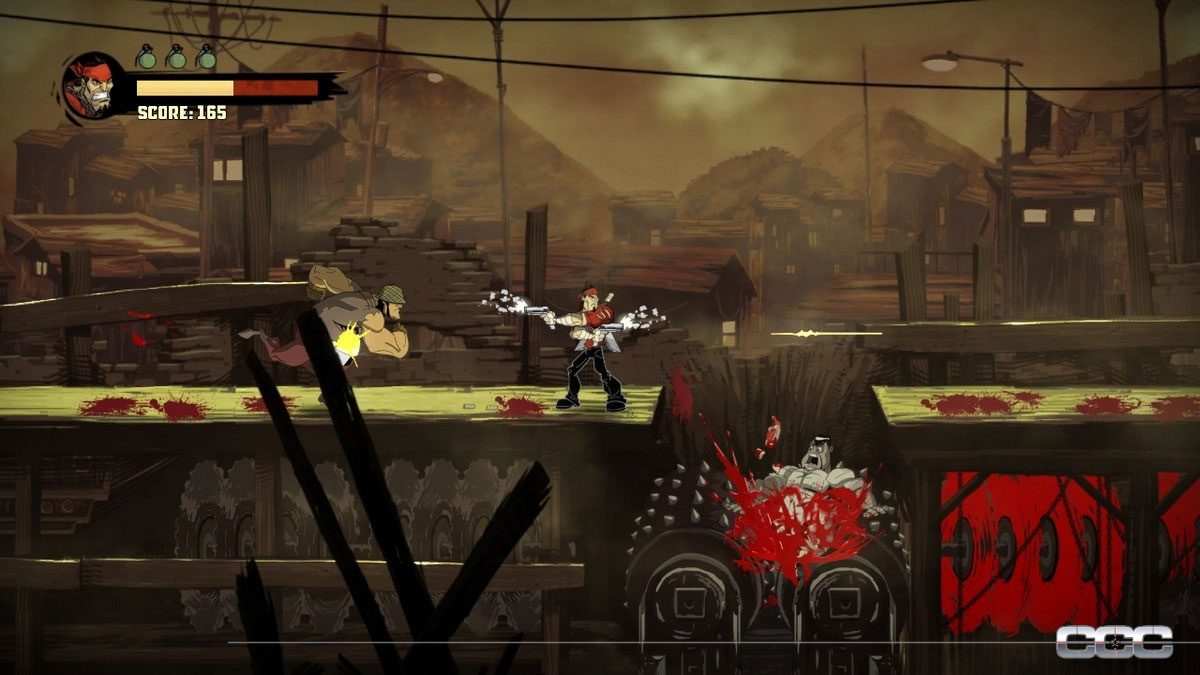
Shank 2 Layers, Gore, Perspective, Design - This is a 2D side scrolling brawler game with personality and lots of gore. I love it. I love the layers in this game. Sky box, mountains, background buildings, level path, and foreground. It gives the game great depth and it makes the game look more full. I think this perspective and level design is a perfect inspiration for our game.


Rochard Modeling and Space- I wanted to show this game because it is a 3D side scrolling that maintains the 2D perspective. This game is also considered a quality looking game. I don't think it is overly complex in design. I like the scale of the environments and how the player navigates through them. I think it's a good size to look at for environments in the game. How wide the paths or doors are and other elements of the the 3D but 2D limitations.


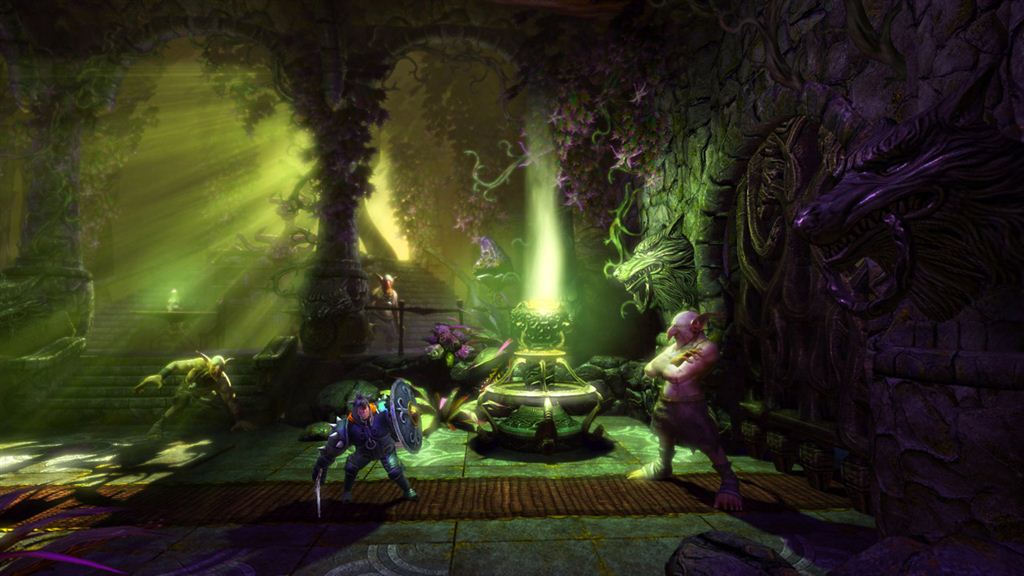
Trine 2 Lighting - I chose to show Trine 2 for the lighting and effects. This game is truly beautiful. I think a lot of the effects are a bit out of the realm of our engine right now but the lighting effects give this game a sense of production value and polish that isn't matched. If we had our layered art style and then a lighting system like this, we would look like an expensive game. It would instantly give the game a visual value.


Alien Hominid Enemies - I chose this game because of the enemies. There is a generic group of "Suit" enemies. The good thing about "suits" is that they can appear in any setting and still fit in. If they represent some evil organization, they can just appear in any level as the base enemy type.


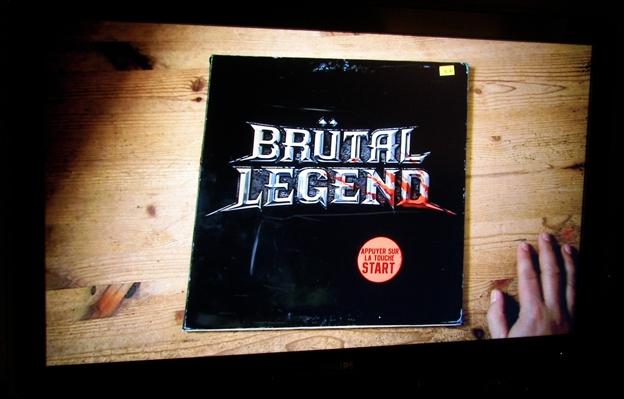
Brutal Legend Menu - Brutal Legend has been a huge inspiration for this game for me in a lot of ways. I LOVE the interface design for brutal legend. It really injects the game with flavor by beign so different and so special. If we can pull something like this off, it just adds another layer of production value to the game. It makes the game seem really special.


Brutal Legend Weapon Design - The guitars in our game are the ranged attack and the melee weapons. We need our guitars to look like they could be both. I want all of the weapons to look like they are enraged.


Guitar Hero 3 Interface - If we are trying to link the game play to a guitar peripheral, we should give the players score feed back that they associate with a guitar. I think that we should tie our combo system, our points system, and our power up system towards the UI of Guitar Hero. The nostalgic connection will help link the guitar peripheral more and it will help the player feel a similar reward system.


Slash Character - Slash is an icon of guitar playing. If we are pursuing a faceless hero, I think Slash's look good be great. He has the hair to cover his face and his has the all black look to associate with metal. His guitars are great inspiration for weapons and how our player will interact with them. Watching Slash jam on a double guitar is inspiring.